Monday, July 22, 2013

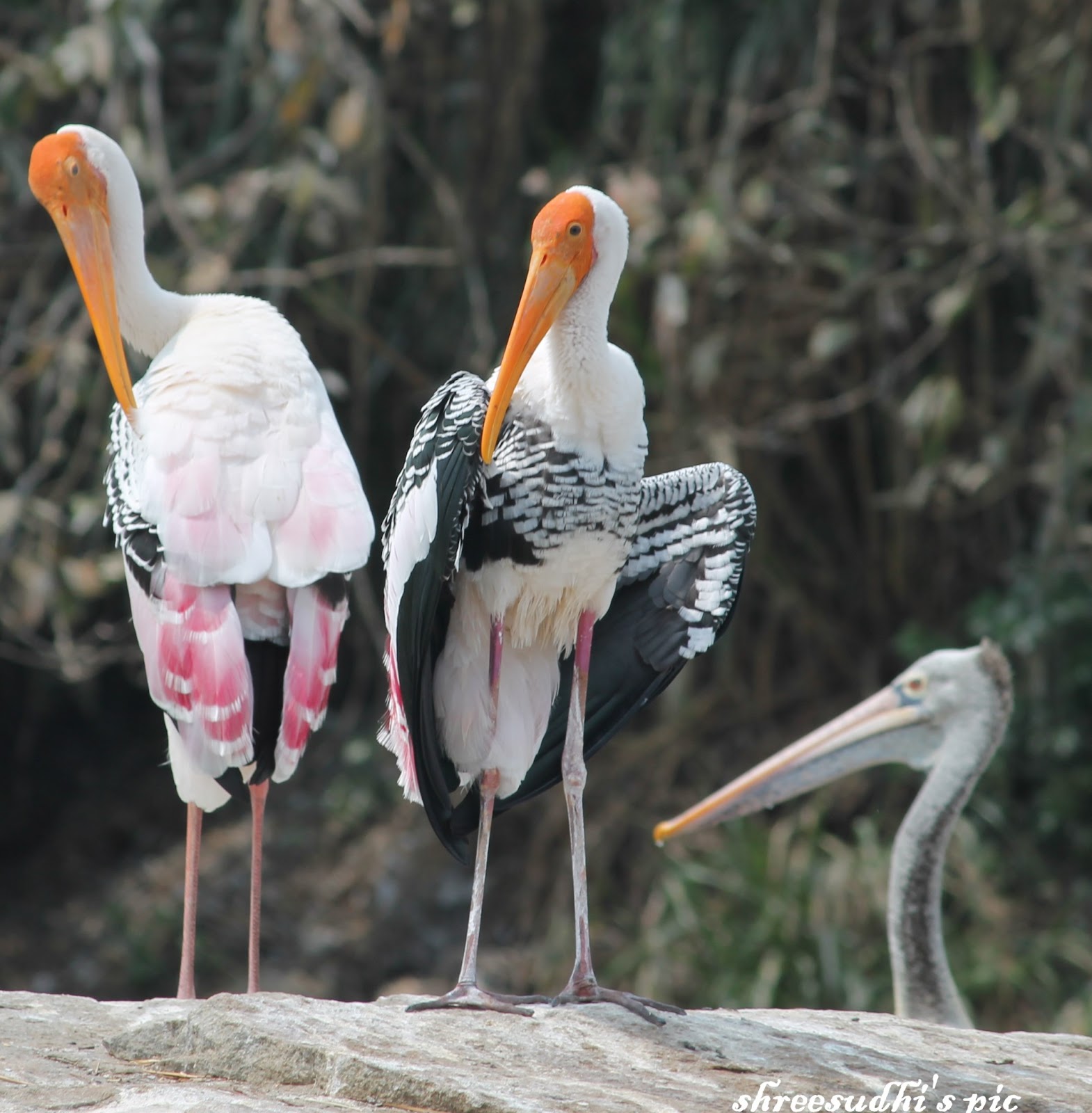
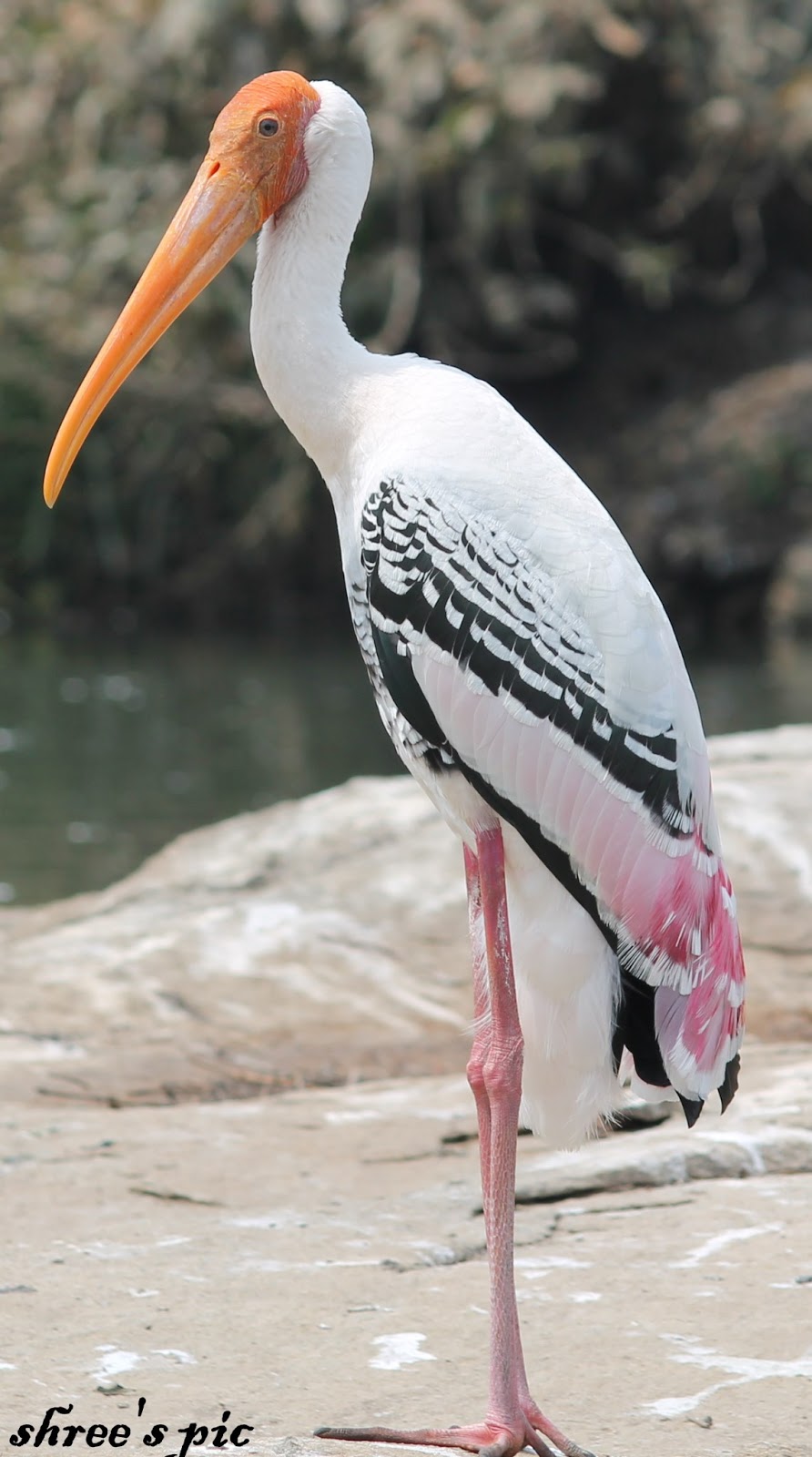
Painted Stork

The Painted Stork is a large wading bird in the stork family. It is found in the wetlands of the plains of tropical Asia south of the Himalayas in the Indian Subcontinent and extending into Southeast Asia. Wikipedia

Scientific name: Mycteria leucocephala
Rank: Species
Higher classification: Mycteria


Sunday, July 21, 2013

White Eye


The white-eyes are small passerine birds native to tropical, subtropical and temperate Sub-Saharan Africa, southern and eastern Asia, and Australasia. White-eyes inhabit most tropical islands in the Indian Ocean, the western Pacific Ocean, and the Gulf of Guinea. Discounting some widespread members of the genus Zosterops, most species are endemic to single islands or archipelagos. The Silvereye, Zosterops lateralis, naturally colonised New Zealand, where it is known as the "Wax-eye" or Tauhau ("stranger"), from 1855. The Silvereye has also been introduced to the Society Islands in French Polynesia, while the Japanese White-eye has been introduced to Hawaii.

Blyth's Reed Warbler


The Blyth's Reed Warbler (Acrocephalus dumetorum) is an Old World warbler in the genus Acrocephalus. It breeds in temperate Asia and easternmost Europe. It is migratory, wintering in India and Sri Lanka. It is one of the most common winter warblers in those countries. It is a rare vagrant to western Europe.
This small passerine bird is a species found in scrub or clearings, often near water, but it is not found in marshes. 4-6 eggs are laid in a nest in a bush.

This is a medium-sized warbler, 12.5-14 cm in length. The adult has a plain brown back and pale underparts. It can easily be confused with Reed Warbler, Marsh Warbler and some of the Hippolais warblers. It is most like Reed Warbler but is greyer on the back, the forehead is less flattened and the bill is less strong and pointed. The sexes are identical, as with most warblers, but young birds are yellower below.
The habitat is different from the reed beds favoured by Reed Warbler or the rank vegetation of Marsh Warbler, this species choosing trees or bushes as songposts. Like most warblers, Blyth's Reed Warbler is insectivorous, but will take other small food items, including berries.
In the breeding season, the best identification feature is the song, which is slow and repetitive, with much mimicry of other birds, punctuated with scales and typically acrocephaline whistles.
This bird is named after the British zoologist Edward Blyth.
Spotted Dove


Pigeons and doves exhibit considerable variations in size. The largest species is the Crowned Pigeon of New Guinea, which is nearly turkey-sized, at a weight of 2–4 kg (4.4–8.8 lb) The smallest is the New World Ground-Dove of the genus Columbina, which is the same size as a House Sparrow and weighs as little as 22 g. With a total length of more than 50 cm (19 in) and weight of almost 1 kg (2 lb), the largest arboreal species is the Marquesan Imperial Pigeon, while the Dwarf Fruit Dove, which may measure as little as 13 cm (5.1 in), has a marginally smaller total length than any other species from this family. Smaller species tend to be known as doves, while larger species as pigeons, but no taxonomic basis distinguishes between the two.


The Spotted Dove (Spilopelia chinensis) is a small and somewhat long-tailed pigeon, which is a common resident breeding bird across its native range on the Indian Subcontinent and Southeast Asia. The species has been introduced into many parts of the world and feral populations have become established. This species was formerly included in the genus Streptopelia with other turtle-doves, but studies suggest that they differ from typical members of that genus. This dove is long tailed buff brown with a white-spotted black collar patch on the back and sides of the neck. The tail tips are white and the wing coverts have light buff spots. There is considerable plumage variations across populations within its wide range. The species is found in light forests and gardens as well as in urban areas. They fly off from the ground with an explosive flutter and will sometimes glide down to a perch. It is sometimes also called the Chinese Dove, Mountain Dove, Pearl-necked Dove or Lace-necked Dove.

Thursday, July 18, 2013

Spotted Munia

The Scaly-breasted Munia or Spotted Munia (Lonchura punctulata), known in the pet trade as Nutmeg Mannikin or Spice Finch, is a sparrow-sized estrildid finch native to tropical Asia. A species of the genus Lonchura, it was formally described and named by Carl Linnaeus in 1758. Its name is based on the distinct scale-like feather markings on the breast and belly. The adult is brown above and has a dark conical bill. The species has 11 subspecies across their range and differ slightly in size and colour.
This Munia eats mainly on grass seeds apart from berries and small insects. They forage in flocks and communicate with soft calls and whistles. The species is highly social and may sometimes roost with other species of munias. This species is found in tropical plains and grasslands. Breeding pairs construct dome-shaped nests using grass or bamboo leaves.
The species is endemic to Asia and occurs from India and Sri Lanka east to Indonesia and the Philippines. It has been introduced into many other parts of the world and feral populations have established in Puerto Rico and Hispaniola as well as parts of Australia and the United States of America. The bird is listed as of Least Concern by the International Union for Conservation of Nature (IUCN).


Saturday, July 13, 2013

Male House Sparrow

The House Sparrow (Passer domesticus) is a bird of the sparrow family Passeridae, found in most parts of the world. A small bird, it has a typical length of 16 cm (6.3 in) and a weight of 24–39.5 g (0.85–1.39 oz). Females and young birds are coloured pale brown and grey, and males have brighter black, white, and brown markings. One of about 25 species in the genus Passer, the House Sparrow is native to most of Europe, the Mediterranean region, and much of Asia. Its intentional or accidental introductions to many regions, including parts of Australia, Africa, and the Americas, make it the most widely distributed wild bird.
The House Sparrow is strongly associated with human habitations, and can live in urban or rural settings. Though found in widely varied habitats and climates, it typically avoids extensive woodlands, grasslands, and deserts away from human development. It feeds mostly on the seeds of grains and weeds, but it is an opportunistic eater and commonly eats insects and many other foods. Its predators include domestic cats, hawks, owls, and many other predatory birds and mammals.
Because of its numbers, ubiquity and association with human settlements, the sparrow is culturally prominent. It is extensively, and usually unsuccessfully, persecuted as an agricultural pest, but it has also often been kept as a pet as well as being a food item and a symbol of lust and sexual potency, as well as of commonness and vulgarity. Though it is widespread and abundant, its numbers have declined in some areas. The animal's conservation status is listed as Least Concern on the IUCN Red List

Purple Immature Male Sunbird


The Purple Sunbird (Cinnyris asiaticus) is a small SUNBIRD.  Like other sunbirds they feed mainly on nectar, although they will also take insects, especially when feeding young. They have a fast and direct flight and can take nectar by hovering like a hummingbird but often perch at the base of flowers. The males appear all black except in some lighting when the purple iridescence becomes visible. Females are olive above and yellowish below.